
Dr. Kenisha Shipley
Postdoc in the Spotlight
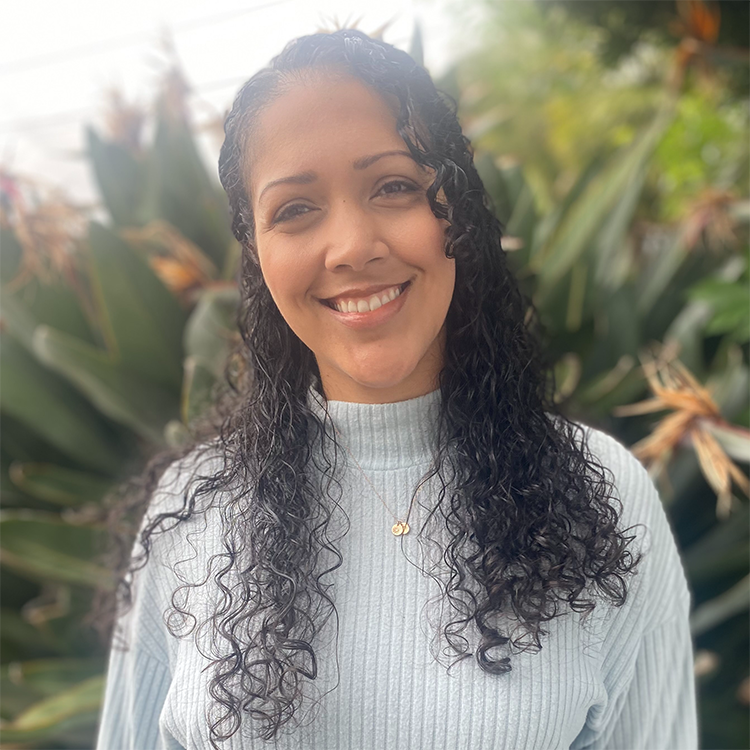
Dr. Kenisha Shipley
PI: Dr. Natalie Mladenov
Area of Research: Urban water quality
What excites you about your current SDSU postdoc position?
I am excited to be back at SDSU! I received my Bachelor’s in Chemistry here at SDSU and having the opportunity to come back as a postdoc has been a real full circle moment for me. My time as an undergraduate had such a huge impact on me and it has been a great experience to be back in a different capacity where I am able to offer mentorship, conduct independent research, and collaborate with students and faculty. It has also been great to see how much the campus has grown and diversified since my time as an undergraduate. Another aspect of this position that excites me is having the opportunity to expand on my research interests from coastal ocean chemistry which was the focus of my PhD work to urban water quality.
Can you tell us a little bit about the cutting edge research/scholarship you are doing? What key questions is your work answering?
I am working with Dr. Natalie Mladenov’s group in the Water Innovation and Reuse Lab and my project is focused on investigating anthropogenic contaminants in urban waters. Our study site is nearby campus at Alvarado Creek where we recently completed the deployment of our sensor platform, which is equipped with a submersible fluorometer and dissolved oxygen sensor. The sensor platform uses telemetry and data-logging capabilities, allowing us to monitor water quality in real-time. Ultimately, we would like to determine if the real-time use of in-situ fluorescence sensors are a viable option for early detection of polluted waters in urban stream systems. Some of the research questions I’ll be working to answer include (1) What are the biogeochemical processes underlying diel and long-term dynamics of fecal indicator bacteria in urban waters? (2) To what extent can tryptophan-like fluorescence track microbial and wastewater-derived pollutants? (3) Can we detect the frequency of bacterial pollution in riverine environments using real-time fluorescence data?
What is your career trajectory and how is your SDSU postdoc position helping you achieve that?
My ultimate career goal is to have a position as a professor and run my own research lab at a minority or Hispanic serving institution. Becoming a professor is particularly important for me because I know how meaningful it can be for underrepresented students to have representation at this level in the STEM fields. This postdoc position is helping me to gain invaluable experience that will help facilitate future opportunities in academia. In my first year, I’ve had opportunities to learn and develop various research techniques, participate in funding workshops, and collaborate with other research groups. I will definitely continue to develop my skills in these areas and I also have plans to gain more mentorship and teaching experience.